
Consciousness and Biological Evolution
Are All Creatures Conscious?
The majority of people will probably say that consciousness is part of the brain, which evolved and developed over time. However, scientists today are incapable of proving this, because the brain does not show any neural activities that control our consciousness. Or if it does, then we are missing it. That said, the theory of consciousness having evolved biologically does seem more credible in many senses. After all, it seems more likely that the brain holds secrets we have not yet uncovered, than there being another dimension that we have not yet discovered. However, if consciousness is a biological concept, then shouldn’t other creatures also have some kind of conscious experience?
Dogs, for example, may not be aware of many of the things we are aware of. They are conscious of very little beyond their immediate world, the world defined by their senses. They know nothing of places they have never seen, nor can dogs be aware of anything but the present time; they know nothing of what has happened in the past and what might happen in the future. They are not aware of their inevitable death in the same way that we are. They don’t think to themselves in words, since they have not developed language, and they probably do not reason as we do. But this does not mean that dogs have no awareness at all. Dogs simply have a more primitive form of consciousness. They experience the world with their senses. Dogs can remember where they have been, recognize sounds, like certain things and dislike others, and they show feelings such as fear and excitement. When asleep, they can even appear to dream, with their toes twitching. They are clearly not just biological mechanisms, and to suggest that they have no conscious experience is absurd.[1]
But if dogs have a conscious experience, then why shouldn’t other mammals like cats, cows, horses, dolphins, and whales have one? And why would it be limited to mammals? Certainly birds, reptiles and insects must have some form of simple consciousness? And if a single-celled organism is sensitive to its environment in some way, who is to say it does not have a corresponding degree of consciousness?
Biological Evolution
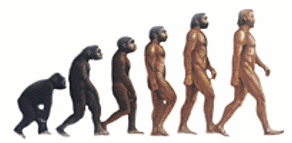
If all creatures are conscious in some way or other, then consciousness is something that has always existed. What developed over the course of history were the various qualities and dimensions of conscious experience.[2] And Darwin’s Theory of Evolution made sure that only the most advanced, most conscious organisms survived. The first simple organisms – bacteria and algae – had no senses, and they were aware in only the most primitive way: no form, no structure, just the vaguest glimmer of awareness. When multicellular organisms evolved, this sensing capacity did so as well. Cells that specialized in sensing light, vibration, pressure, or changes in chemistry started appearing.[3] These cells developed sensory organs, and as those organs developed, an improved ability to take in information came about. Eyes are not only sensitive to light; they react differently to different frequencies, and can tell from which direction the light is coming.[4] And so, the faint blur of light which was the bacterium's experience had begun to take on different hues and shapes. Nervous systems evolved, processing information and distributing it to other parts of the creature. The distribution of the information started to require a central processing system, which helped to form a more integrated picture of the world. As brains evolved, new features were added to consciousness. With reptiles the limbic system appeared, an area of the brain that controls emotion and behaviour, and with birds and mammals the nervous system became more advanced, developing a cortex around it.[5] The cortex brought the ability to remember, recognize, pay attention, and show intention.[6] With primates the cortex grew into the larger, more complex neo-cortex, adding even more features to consciousness, such as the ability to think consciously and use symbols to communicate.[7] Not only did these abilities enable simple reasoning, it also led to a new form of communication – symbolic language.
[1] https://www.peterrussell.com/SCG/EoC.php
[2] https://www.peterrussell.com/SCG/EoC.php
[3] https://www.peterrussell.com/SCG/EoC.php
[4] https://www.peterrussell.com/SCG/EoC.php
[5] https://www.peterrussell.com/SCG/EoC.php
[6] https://www.peterrussell.com/SCG/EoC.php
[7] https://www.peterrussell.com/SCG/EoC.php
Consciousness and Biological Evolution
No comments found.